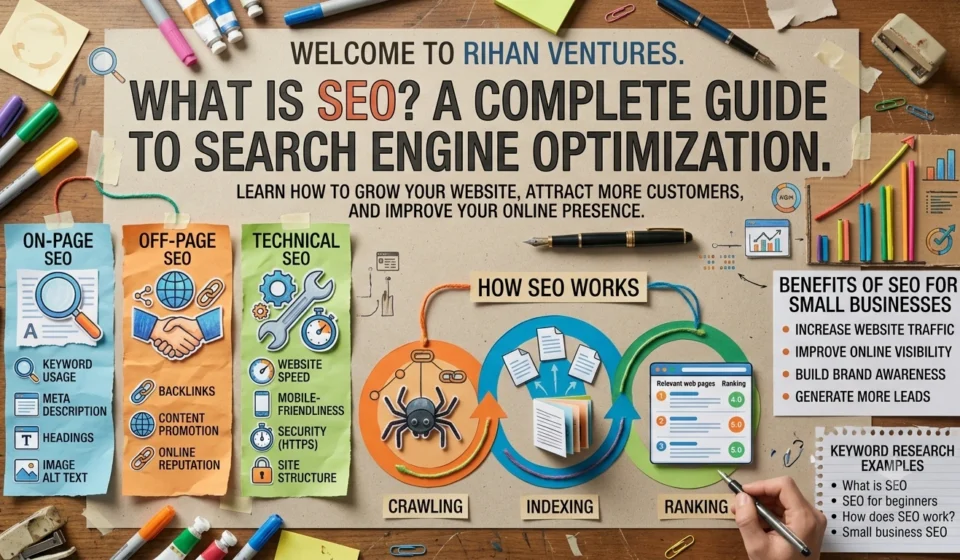

Welcome to Rihan Ventures, your guide to digital marketing, online business growth, and search engine optimization. If you want to grow your website and attract more customers online, understanding What Is SEO is an important first step.
What Is SEO? SEO stands for Search Engine Optimization. It is the process of improving a website to increase its visibility in organic search engine results. SEO helps businesses reach their target audience, attract relevant visitors, and build a stronger online presence without paying for every organic click.
At Rihan Ventures, we believe that learning What Is SEO can help beginners, bloggers, entrepreneurs, and business owners understand how to improve their websites and grow their businesses online.
What Is SEO and Why Is It Important?
To understand What Is SEO, you first need to understand how people search for information online. When users search for products, services, or answers on Google, they usually see a list of relevant web pages.
SEO helps search engines understand your website content and helps users discover pages that match their needs.
Here are some important reasons why SEO matters:
- Increase Website Traffic: SEO can help attract visitors through organic search results.
- Improve Online Visibility: Your website may become easier to discover for relevant searches.
- Build Brand Awareness: Helpful content can introduce your business to new audiences.
- Generate More Leads: Relevant visitors may contact your business or enquire about your services.
- Support Long-Term Growth: Consistent SEO improvements can provide lasting value over time.
For businesses looking to grow online, understanding What Is SEO is an important part of building an effective digital marketing strategy.
How Does SEO Work?
Now that you understand What Is SEO, let’s explore how search engines work.
Search engines use automated systems to discover, analyze, and organize web pages. SEO helps make your website easier for search engines and users to understand.
1. Crawling
Crawling is the process by which search engines discover web pages using automated programs called crawlers. These programs follow links and look for new or updated content.
2. Indexing
Indexing happens when a search engine analyzes a page and may store information about it in its index. A page must generally be indexed to appear in regular organic search results.
3. Ranking
Ranking is the process of ordering relevant pages for a particular search query. Search engines consider many signals, including relevance, content quality, usability, and context.
Understanding these steps helps you learn What Is SEO and why website structure, useful content, and technical performance matter.
What Are the Main Types of SEO?
When learning What Is SEO, it is important to understand the three main areas of search engine optimization: On-Page SEO, Off-Page SEO, and Technical SEO.
1. On-Page SEO
On-Page SEO focuses on improving the content and elements of individual website pages.
Important On-Page SEO techniques include:
- Using relevant keywords naturally.
- Writing descriptive SEO titles and meta descriptions.
- Organizing content with H1, H2, and H3 headings.
- Adding descriptive alt text to images.
- Creating helpful, original, and readable content.
- Adding relevant internal links.
- Using clear and descriptive URLs.
For example, if your focus keyword is What Is SEO, include it naturally in your title, introduction, and relevant headings.
2. Off-Page SEO
Off-Page SEO includes activities outside your website that help build your website’s reputation and visibility.
Common Off-Page SEO techniques include:
- Earning relevant backlinks from trustworthy websites.
- Publishing content that other websites find useful.
- Promoting your content through suitable channels.
- Building genuine relationships with other businesses.
- Maintaining accurate business information on relevant directories.
Quality matters more than quantity when building backlinks. Avoid spammy links and manipulative SEO practices.
3. Technical SEO
Technical SEO focuses on making your website easier for search engines to crawl, understand, and access.
Important Technical SEO practices include:
- Improving website loading speed.
- Making your website mobile-friendly.
- Using HTTPS for website security.
- Creating an XML sitemap.
- Checking robots.txt settings.
- Fixing broken links and redirect errors.
- Resolving duplicate content and indexing issues.
Learning What Is SEO also means understanding that a technically sound website provides a better foundation for your SEO efforts.
What Is SEO Keyword Research?
Keyword research is the process of identifying the words and phrases people use when searching online.
For example, someone interested in SEO may search for:
- What Is SEO
- SEO for beginners
- How does SEO work?
- Search Engine Optimization services
- Best SEO strategies for small businesses
Choosing relevant keywords helps you create content that answers your audience’s questions.
For Rihan Ventures, What Is SEO is the primary focus keyword for this article. You can use related phrases throughout the content where they fit naturally.
Avoid repeating the same keyword unnecessarily. There is no universal keyword density percentage that guarantees better Google rankings. Focus on readability, relevance, and answering the reader’s question.
What Is SEO in Digital Marketing?
SEO is an important part of digital marketing because it helps businesses connect with people who are actively searching for relevant information, products, or services.
Digital marketing includes several strategies, such as:
- Search Engine Optimization (SEO)
- Social Media Marketing
- Pay-Per-Click Advertising (PPC)
- Content Marketing
- Email Marketing
- Website Development
SEO differs from paid advertising because organic search traffic does not require payment for each click. However, SEO still requires time, planning, content creation, and ongoing improvements.
At Rihan Ventures, understanding What Is SEO can help business owners see how search optimization works alongside other digital marketing activities.
What Are the Benefits of SEO for Small Businesses?
Small businesses can use SEO to improve their online presence and reach relevant customers.
Reach Your Target Audience
SEO helps you create content that matches the questions and needs of potential customers.
Compete Online
Useful content, clear service pages, and a well-structured website can help smaller businesses compete for relevant searches.
Improve User Experience
SEO encourages readable content, mobile-friendly design, useful navigation, and clear page structure.
Measure Your Progress
Tools such as Google Search Console and Google Analytics can help you understand search visibility, clicks, traffic, and user activity.
For small businesses, learning What Is SEO is a useful first step toward making informed digital marketing decisions.
How to Improve SEO for Your Website
If you want to apply what you have learned about What Is SEO, follow these beginner-friendly steps.
- Choose a Focus Keyword: Identify a relevant search phrase for each important page.
- Create Helpful Content: Answer your audience’s questions clearly and accurately.
- Optimize Page Titles: Write unique, descriptive titles that explain each page’s topic.
- Use Clear Headings: Organize information with logical H1, H2, and H3 headings.
- Optimize Images: Compress images and write descriptive alt text.
- Improve Website Speed: Reduce unnecessary files and use appropriately sized images.
- Add Internal Links: Link related blog posts and service pages together.
- Check Mobile Usability: Make sure your website works well on smartphones.
- Monitor Performance: Use Google Search Console to track impressions, clicks, and indexing issues.
- Update Content Regularly: Review older content when information becomes outdated or improvements are needed.
Following these steps consistently can help build a stronger SEO foundation, although rankings and traffic growth are never guaranteed.
Common SEO Mistakes to Avoid
While learning What Is SEO, beginners should avoid these common mistakes:
- Stuffing keywords into every paragraph.
- Copying content from other websites.
- Publishing thin or unhelpful articles.
- Ignoring mobile users.
- Using misleading page titles.
- Adding images without relevant alt text.
- Building spammy backlinks.
- Expecting immediate ranking results.
SEO is an ongoing process. Focus on creating a useful experience for visitors instead of trying to manipulate search engines.
What Is SEO? Final Thoughts
So, What Is SEO? It is the process of improving your website so that search engines can better understand your content and users can find relevant information more easily.
SEO combines helpful content, keyword research, On-Page SEO, Off-Page SEO, and Technical SEO to support better search visibility and long-term online growth.
At Rihan Ventures, our goal is to help businesses understand digital marketing and discover opportunities to grow online. By learning What Is SEO and applying these best practices, you can build a stronger website, reach relevant audiences, and create a solid foundation for your digital marketing journey.
Start improving your website today, focus on your audience’s needs, and keep learning as search technology evolves.
Frequently Asked Questions About What Is SEO
1. What Is SEO in simple words?
SEO is the process of improving a website so it can appear more prominently in relevant unpaid search engine results.
2. Why is SEO important for a website?
SEO can help improve online visibility, attract relevant organic traffic, support lead generation, and make useful content easier to discover.
3. What are the three main types of SEO?
The three main areas are On-Page SEO, Off-Page SEO, and Technical SEO.
4. How long does SEO take to show results?
SEO results vary depending on competition, website condition, content quality, and other factors. Meaningful improvements may take several months, and there is no guaranteed timeline.
5. Can beginners learn SEO?
Yes. Beginners can start with keyword research, helpful content creation, page optimization, internal linking, and basic technical SEO.
6. Is SEO free?
Organic search results do not charge a fee for each click, but SEO may involve costs for tools, content creation, technical support, and professional services.
7. What is the difference between SEO and PPC?
SEO focuses on improving organic search visibility, while PPC involves paid advertising where advertisers commonly pay when users click their ads.
Learn more with Rihan Ventures: Explore our digital marketing resources to understand SEO, online advertising, content marketing, and strategies for growing your business online.